November 9, 2026
What Is LTL Shipping? How LTL Freight Works, Freight Class and Rates (2026)
What is LTL shipping? LTL (less-than-truckload) is freight too big for parcel but too small to fill a trailer, typically one to six pallets or roughly 150 to 15,000 pounds. Your pallets share a truck with other shippers' freight, move through the carrier's terminals, and are priced by weight, distance and freight class, plus fuel and any accessorial fees. Checked November 9, 2026.
Quick answer: Use LTL when a shipment is over about 150 pounds and fits on a few pallets. What you pay depends on the freight class (now mostly driven by density after the July 2025 NMFC changes), accurate weight and dimensions on the bill of lading, the accessorials you trigger, and the discount and minimum charge in your rate agreement.
Sources: Old Dominion LTL shipping guide, Accessorial Services (ODFL 100-Q, effective October 5, 2026) and Bill of Lading guide; FedEx How do I know if my shipment is classified as freight? and NMFC changes density scale; FedEx Freight fuel surcharges; Estes fuel surcharge; NMFTA Docket 2025-1 announcement and Classification 101; PITT OHIO rules tariff Item 1014; 49 U.S.C. 14706, 49 CFR Part 370 and 49 CFR 373.101; FMCSA operating authority. All checked November 9, 2026.
Key facts
- FedEx treats shipments over 150 lbs as freight; Old Dominion describes typical LTL as one to six pallets, roughly 150 to 15,000 lbs.
- Freight classes run from 50 (least expensive) to 500, based on density, handling, stowability and liability.
- NMFC Docket 2025-1 took effect July 19, 2025 and moved many items to density-based classes on a new 13-subprovision scale.
- LTL fuel surcharges reset weekly off the U.S. Department of Energy national average diesel price. FedEx Freight's LTL rate for November 4 to 10, 2026 was 58.70%.
- Old Dominion's liftgate charge is $4.40 per hundredweight ($115 minimum, $330 maximum) under its tariff effective October 5, 2026.
- Carmack Amendment: a carrier cannot give you less than 9 months to file a loss or damage claim or less than 2 years to sue.
LTL Meaning: How Less-Than-Truckload Freight Works
LTL means less-than-truckload. Instead of paying for a whole 53-foot trailer, you pay for the space and weight your freight uses, and the carrier fills the rest of the trailer with other customers' shipments. Old Dominion describes LTL as suited to shipments "too large for parcel carriers but not large enough to fill an entire trailer," typically one to six pallets or roughly 150 to 15,000 pounds. FedEx draws the parcel line at the same place: over 150 lbs is freight.
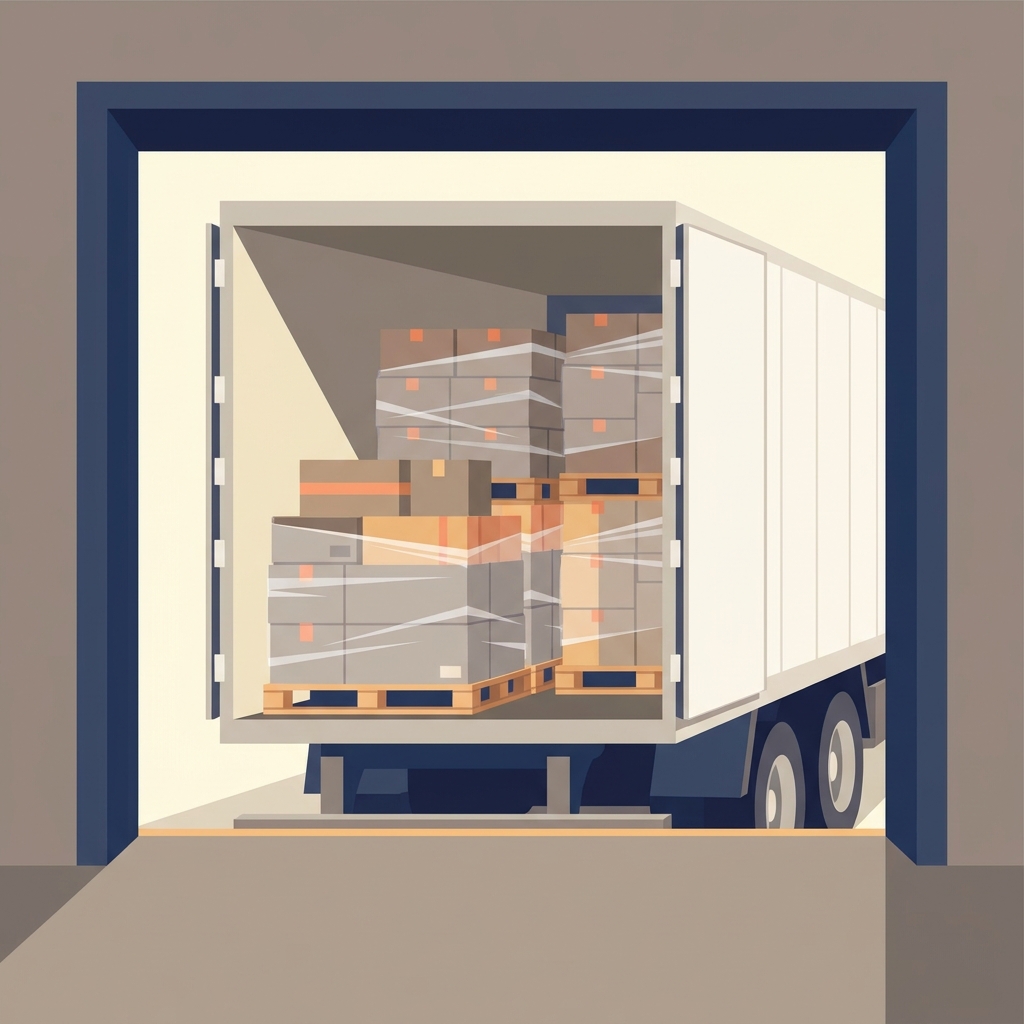
LTL carriers run hub-and-spoke networks. A local driver picks up your pallets, a service center sorts them onto a linehaul trailer, that trailer runs to a terminal near the destination, and a local truck delivers. Every transfer is a chance for delay or damage, so packaging and paperwork matter more than in truckload.
LTL vs FTL vs Parcel
| Parcel | LTL freight | FTL (truckload) | |
|---|---|---|---|
| Typical size | Individual boxes under about 150 lbs | 1 to 6 pallets, about 150 to 15,000 lbs | Enough freight to fill or claim a whole trailer |
| How it is priced | Rate by weight (or dimensional weight) and zone, plus surcharges | Tariff rate per hundredweight by lane, weight and freight class, minus discount, plus fuel and accessorials | Usually a price per load or per mile, plus fuel |
| Handling | Sorted by conveyor, many touches | Moves through terminals; pallets are cross-docked | Loaded once, delivered once |
| Paperwork | Shipping label | Bill of lading with class or NMFC item, weight, handling units | Bill of lading and rate confirmation |
| Best for | Small, sturdy cartons | Palletized freight that does not fill a trailer | Full or near-full trailers, time-sensitive or fragile loads |
The gray zone is at both ends. Heavy single boxes can cost less as parcel than as a one-pallet LTL shipment once LTL minimum charges and accessorials are added; see the cheapest way to ship heavy boxes. At the top end, Old Dominion treats shipments needing 20 linear feet or more, or weighing 20,000 lbs or more, as capacity loads with separate pricing, which is the point to also ask for a volume or truckload quote.
How LTL Shipping Rates Work
An LTL freight bill has three main parts, per Old Dominion: the base linehaul rate, a variable fuel surcharge, and accessorial fees. Here is how each is built.
- Base rate (tariff). Each carrier publishes base rates by origin, destination, freight class and weight break, usually per hundredweight (cwt, 100 lbs). Heavier weight breaks carry a lower rate per cwt.
- Discount off tariff. Most business shippers do not pay the tariff. Their rate agreement applies a percentage discount to the base rate, Compare offers on net cost, not on the size of the discount.
- Minimum charge. Every agreement has a floor per shipment. Small shipments often bill at the minimum, which is where parcel can win.
- FAK (freight all kinds). An FAK provision rates a range of classes as one class, for example billing class 70 to 100 freight at a single class. It only helps if the FAK class is below what your freight would otherwise rate.
- Fuel surcharge. A percentage that resets weekly. FedEx Freight bases it on the Department of Energy national average diesel price and applies it to linehaul charges and other fuel-consuming services; its LTL rate for November 4 to 10, 2026 was 58.70%.
- Accessorials. Extra services or conditions, covered below.
Because fuel is a percentage of linehaul, a better discount also lowers your fuel charge. The contract terms that drive these numbers are covered in how to read a carrier contract and shipping contract negotiation.
LTL Freight Class and the 2025 NMFC Density Changes
Freight class comes from the National Motor Freight Classification (NMFC), published by the National Motor Freight Traffic Association (NMFTA). NMFTA places commodities in classes from 50, the most favorable, to 500, the least, based on four characteristics: density, handling, stowability and liability. Higher class means a higher rate per cwt.
The biggest change in years took effect on July 19, 2025, when NMFTA implemented NMFC Docket 2025-1 and launched ClassIT+ as the home for NMFC data. The docket moved many commodities from commodity-based to density-based classes and introduced a 13-subprovision density scale. FedEx published the scale this way:
| Density (lbs per cubic foot) | Class |
|---|---|
| Less than 1 | 400 |
| 1 but less than 2 | 300 |
| 2 but less than 4 | 250 |
| 4 but less than 6 | 175 |
| 6 but less than 8 | 125 |
| 8 but less than 10 | 100 |
| 10 but less than 12 | 92.5 |
| 12 but less than 15 | 85 |
| 15 but less than 22.5 | 70 |
| 22.5 but less than 30 | 65 |
| 30 but less than 35 | 60 |
| 35 but less than 50 | 55 |
| 50 or greater | 50 |
How to calculate density: multiply length x width x height in inches, divide by 1,728 to get cubic feet, then divide the weight in pounds by the cubic feet. A 48 x 40 x 48 inch pallet is 53.3 cubic feet; at 600 lbs that is about 11.3 lbs per cubic foot, class 92.5 on this scale. Measure the whole handling unit as shipped: PITT OHIO's rules tariff computes density from each skid's weight including packaging and pallets, and uses a height of at least 96 inches for freight that cannot have other freight loaded on top. Not every item is density-rated, so confirm your commodity's NMFC item and subprovision in ClassIT+.
Old Dominion's tariff says a bill of lading without a class or description defaults to class 100, and that the carrier can inspect and weigh freight and bill on the correct description and weight. That is the reweigh and reclass charge. More on why the box dimensions drive cost in why pallet dimensions matter more than weight.
Common LTL Accessorial Charges
Accessorials are where quotes and invoices diverge. The charges below are from Old Dominion's accessorial schedule based on tariff ODFL 100-Q, effective October 5, 2026, for the 48 contiguous states. Other carriers use similar triggers with their own prices, and your agreement may change them.
| Accessorial | What triggers it | Old Dominion charge (eff. Oct 5, 2026) |
|---|---|---|
| Liftgate | No dock at pickup or delivery; freight must be lowered from the truck bed | $4.40/cwt, $115 min, $330 max |
| Limited access (includes residential) | Residences, schools, construction sites, military facilities | $7.20/cwt, $125 min, $580 max |
| Inside pickup or delivery | Freight moved beyond the dock or threshold | $7.70/cwt, $125 min, $605 max (higher in NY ZIPs 100-102) |
| Appointment / prior notification | Consignee requires a call or a set delivery window | $30 flat |
| Redelivery | Shipment cannot be received on the first attempt | $7.20/cwt, $175 min, $580 max |
| Corrected bill of lading | Bill of lading details changed after tender | $45 flat |
| Reweigh / reclass | Carrier inspection finds a different weight or description | Rebilled at the correct weight and class |
| Overlength | Articles 8 feet or longer | $495 to $1,300 by length |
The fix for most accessorials is information. If the delivery address is a business without a dock, say so on the quote and order the liftgate up front; a missed liftgate means a failed attempt and a redelivery. If the consignee needs an appointment, include it. And measure and weigh after wrapping, so the carrier's inspection agrees with your bill.
How to Get an LTL Quote
Carriers and brokers need the same information for an accurate LTL quote:
- Origin and destination ZIP codes, and whether each location is a business with a dock, a business without a dock, a residence or another limited-access site.
- Number and type of handling units (pallets, crates) and pieces.
- Dimensions of each handling unit in inches, including the pallet, and whether it can be stacked.
- Weight of each handling unit including packaging.
- Freight class or NMFC item, with density if the item is density-rated.
- Accessorials needed: liftgate, inside delivery, appointment, and hazardous materials information if applicable.
- Pickup date and any required delivery date.
Packaging and Palletizing for LTL
- Use a sound pallet sized to the load. A standard 48 x 40 pallet fits most LTL freight. Grades and prices are in our wooden pallet cost guide.
- No overhang. Cartons hanging over the pallet edge get crushed and can change the measured dimensions.
- Stack square and flat. Heaviest cartons on the bottom, a flat top so freight can be stacked on you.
- Stretch wrap and secure. Wrap the load to the pallet, and use corner boards or banding for heavy or tall loads.
- Label every handling unit with shipper, consignee and the bill of lading or PRO number.
Bill of Lading Basics
The bill of lading (BOL) is the receipt and contract for the shipment. Federal rules at 49 CFR 373.101 require a motor carrier's receipt or bill of lading to show the shipper and consignee, origin and destination, number of packages, a description of the freight, and the weight, volume or measurement where it affects the rate. Old Dominion's BOL guide adds what carriers need in practice: handling units and pieces, a complete description, NMFC number or class for each commodity, weight including packaging, hazmat details if any, accessorials, special instructions, and any declared value. Who pays freight is set on the BOL too; see FOB shipping terms and landed cost vs FOB for how that flows into product cost.
Transit Times and Choosing an LTL Carrier or Broker
LTL transit is generally slower than truckload because of terminal handling. Ask for standard transit days on each quote and treat them as estimates unless you buy a guaranteed service.
You can book directly with an LTL carrier or through a freight broker or 3PL that resells several carriers' capacity. FMCSA requires interstate operating authority for companies that transport regulated freight owned by others or arrange its transport for compensation, so check a broker's registration before you hand over freight. When comparing carriers, look past the quote:
- Direct coverage of your lanes versus handoffs to partner carriers
- The accessorial schedule and rules tariff, not just the base rate
- Minimum charge and FAK terms in the agreement
- Claims process and how quickly damage claims are paid
In my role as president of a 3PL, the lines I check first on any LTL invoice are the billed class, the billed weight and the accessorials, because those are where the invoice drifts from the quote. If you are weighing outsourced logistics, see how to choose a 3PL, and for auditing freight bills, our parcel and freight audit guide.
LTL Freight Claims: Carmack Amendment Basics
Interstate motor carrier liability for loss and damage is set by the Carmack Amendment, 49 U.S.C. 14706. The key points:
- Liability. The carrier is liable for the actual loss or injury to the property, unless a lower value applies. Carriers may limit liability to a value the shipper declares in writing or electronically, so read the released value terms on the BOL and tariff.
- Deadlines. A carrier cannot set less than 9 months to file a claim or less than 2 years to bring a lawsuit, and the 2 years run from the date the carrier gives written notice that it has disallowed the claim.
- What counts as a claim. Under 49 CFR 370.3 it must be in writing, identify the shipment, assert liability, and demand a specified or determinable amount.
- Carrier response. The carrier must acknowledge a claim within 30 days (370.5) and pay, decline or offer a compromise within 120 days, with written status updates every 60 days after that (370.9).
In practice, count the pallets and note visible damage on the delivery receipt before signing, take photos, keep the packaging, and report concealed damage to the carrier as soon as you find it; carrier rules tariffs set their own notice procedures. This section is general information, not legal advice.
When to Use Parcel vs LTL vs FTL
- Parcel: cartons under about 150 lbs each that can travel through sortation. Watch dimensional weight and large-package surcharges; the parcel side of this tradeoff is in how LTL thinking creates small parcel penalties.
- LTL: palletized freight from about 150 lbs up to roughly six pallets or 15,000 lbs, especially when the consignee has a dock.
- Volume LTL or FTL: shipments approaching 20 linear feet or 20,000 lbs, fragile freight that should not be cross-docked, or anything where a direct, single-load move is worth the price.
At the boundaries, quote both modes.
Paul's take: As a personal rule, when the parcel cost for all the packages going to the same place at the same time goes past $300, I start to think about LTL. Then I ask two things. Could it fit on a pallet? And is it going to a commercial address with a loading dock? LTL to a residence is tough. Also, don't forget about hundredweight pricing.
Paul D'Arrigo, D'Arrigo Consulting
Hundredweight pricing in one line: UPS Hundredweight Service and FedEx multiweight pricing rate several boxes going to one address on the same day as a single shipment, by total weight. Both carriers list a 200 lb minimum for ground shipments and 100 lb for most air services. UPS offers it as a contractual service for accounts with scheduled pickup, and FedEx adds it to your account. Checked November 14, 2026.
Frequently Asked Questions
What does LTL mean in shipping?
LTL stands for less-than-truckload: freight that does not need a whole trailer, so it shares a truck with other shippers' freight and is priced by weight, distance and freight class.
How much does LTL shipping cost?
There is no flat price. You pay the tariff base rate for your lane, weight and class, minus your negotiated discount, subject to a minimum charge, plus a weekly fuel surcharge and any accessorials such as liftgate or residential delivery.
How long does LTL shipping take?
Usually longer than truckload, because freight is sorted at terminals. Carriers publish transit days by lane; treat them as estimates unless you buy a guaranteed service.
What is the difference between LTL and FTL?
LTL shares a trailer, moves through terminals and is priced by weight, distance and freight class. FTL books a whole trailer for one shipper, usually priced per load or per mile, and goes straight from pickup to delivery.
How do I determine freight class for LTL?
Find your commodity's NMFC item in NMFTA's ClassIT+. For density-rated items, divide weight in pounds by cubic feet (length x width x height in inches divided by 1,728). Since July 19, 2025, 50 lbs per cubic foot or more is class 50 and under 1 lb per cubic foot is class 400.
What is the minimum weight for LTL shipping?
There is no legal minimum. FedEx treats shipments over 150 lbs as freight, and Old Dominion describes typical LTL as roughly 150 to 15,000 lbs.
How long do I have to file an LTL freight claim?
Under 49 U.S.C. 14706, a carrier cannot give you less than 9 months to file a claim or less than 2 years to sue, counted from the carrier's written notice disallowing the claim.
Related Reading
- LTL Freight Rates 2026: How They Are Calculated and What Drives Your Quote
- The Hidden Cost of Treating Parcel Like Freight
- Freight Class Chart: How to Calculate Your LTL Freight Class (2026)
- What Is a Bill of Lading (BOL)? Meaning, Types and How to Fill One Out
- Freight Accessorial Charges 2026: Liftgate, Limited Access and Inside Delivery Fees
- Parcel Audit & Freight Audit Services: What They Check, Recover and Cost (2026)
- Wooden Pallet Cost Guide 2026: Grades, Prices & What to Buy
- Cheapest Way to Ship Heavy Boxes in 2026: 20 to 100 lb Rates Compared
- How to Read a Carrier Contract: The Clauses That Actually Determine What You Pay
- Shipping Contract Negotiation: What's Negotiable & How to Build Leverage
- How to Choose a 3PL: Why the Lowest Bid Usually Costs You More
- FOB Shipping Explained: Origin vs Destination & What It Means for Your Costs
- Landed Cost vs FOB Price: What's Included and How to Calculate It
- What Is CBM in Shipping? How to Calculate Cubic Meters
- Standard Pallet Size: 48 x 40 Inches, and How Many Fit on a Truck
- What Is Cross Docking? How It Works and When It Pays Off
Get a free freight invoice audit
D’Arrigo Consulting reviews parcel and LTL freight bills line by line for reclass and reweigh charges, accessorials that were never ordered, fuel surcharge errors and rates that do not match your agreement. Request a free invoice audit.
This article is general information, not legal advice. LTL rates, freight classes and accessorials are set by each carrier's tariffs and your rate agreement; check them before shipping. Prices and rules were checked on November 9, 2026, change frequently and may differ for your account. D'Arrigo Consulting is not affiliated with the companies mentioned and receives nothing for these mentions. Have questions? Reach out to us, we're happy to help.

Meet the Author
paul@darrigoconsulting.com
I’m Paul D’Arrigo. I’ve spent my career building, fixing, and scaling operations across eCommerce, fulfillment, logistics, and SaaS businesses, from early-stage companies to multi-million-dollar operators. I’ve been on both sides of growth: as a founder, an operator, and a fractional COO brought in when things get complex and execution starts to break