
November 14, 2026
What Is Dunnage? Types, Uses and the Rule for Wood Dunnage
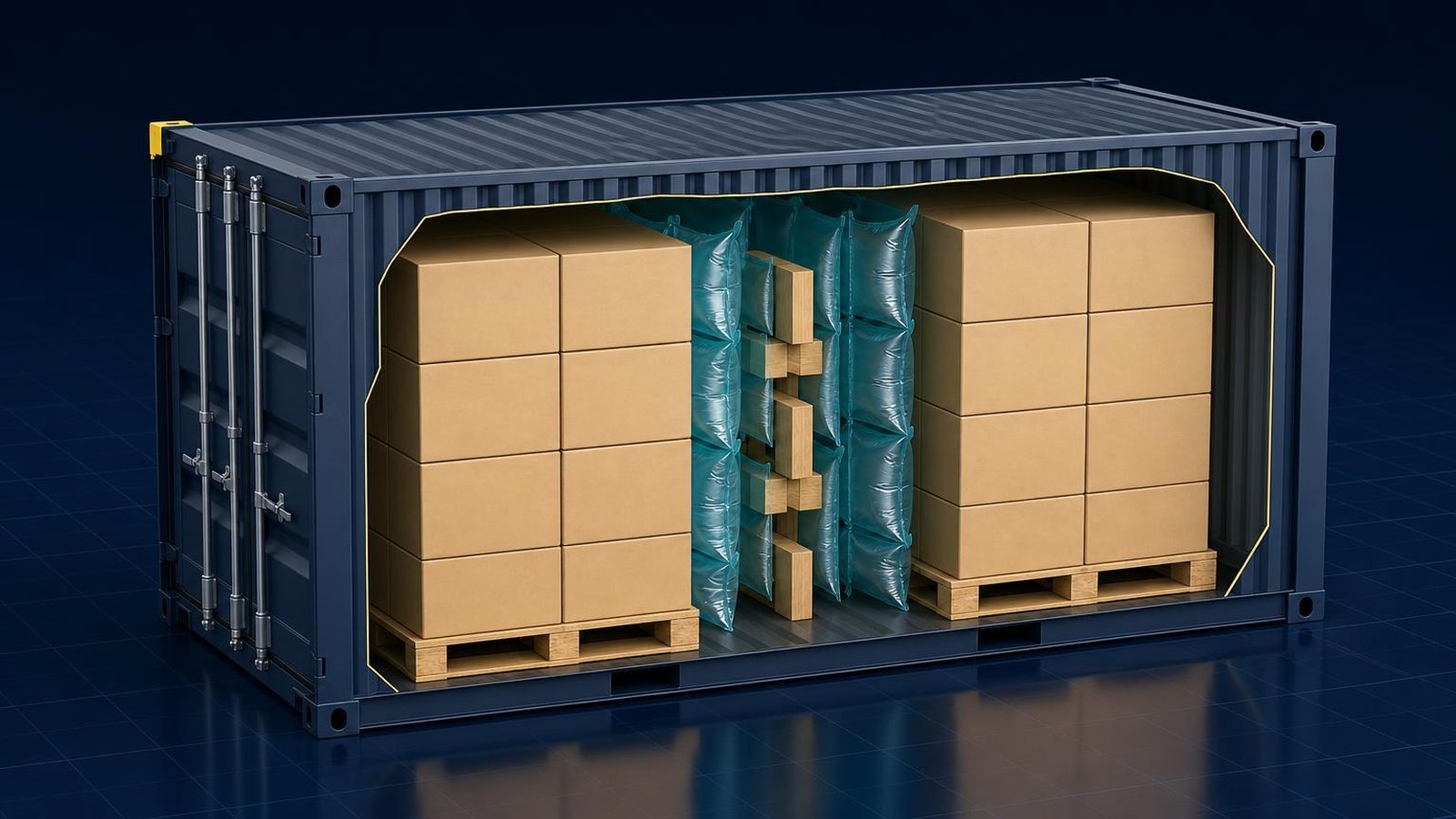
Dunnage is the material used to brace, support and protect cargo so it doesn't shift or get crushed in transit. It can be wood blocking, air bags, foam, paper or plastic. Wood dunnage on international shipments has to be treated and marked under ISPM 15.
Quick answer: Dunnage fills the gaps. It goes between pallets in a trailer, around machinery in a container and inside a carton around the product. It secures or supports the freight but is not part of the product or its retail packaging.
Sources: wood packaging rules from USDA APHIS and the ISPM 15 standard it applies. Checked November 14, 2026.
Types of Dunnage
| Type | Where it is used |
|---|---|
| Wood blocking and bracing | Heavy freight, machinery, loads in containers and on flatbeds |
| Dunnage air bags | Gaps between pallets in trailers, containers and rail cars |
| Corrugated and kraft paper | Void fill inside cartons |
| Foam and molded inserts | Fragile and high-value items |
| Reusable plastic | Returnable packaging between a supplier and a plant |
Dunnage vs Packaging vs Pallets
Packaging stays with the product. A pallet carries the load. Dunnage does neither: it secures or supports the freight during the move and is usually removed at the other end. ISPM 15 uses the same idea, defining dunnage as wood packaging material that secures or supports a commodity without staying associated with it. For pallet sizes, see the standard pallet size.
The ISPM 15 Rule for Wood Dunnage
ISPM 15 is the international standard for wood packaging material, and it covers dunnage along with pallets and crates. Wood has to be heat treated, to a core temperature of 56°C (133°F) for at least 30 minutes, or fumigated, and then stamped with the official mark.
- APHIS says shipments with noncompliant wood packaging material will not be allowed to enter the United States.
- Once wood is treated and marked, the treatment does not expire. It can be reused without being treated again.
- APHIS publishes a list of countries that require ISPM 15 compliance. Check it before you export.
- Plywood and other processed wood, and wood thinner than 6 mm, are exempt.
Our wooden pallet guide covers the same rule for pallets.
Dunnage and Your Freight Bill
Dunnage rides with the freight, so its weight is part of the shipment weight a carrier bills. On LTL, a load that can't be stacked or that shifts in transit can lead to extra charges and damage claims. See LTL accessorial charges, the freight class chart and what a bill of lading is.
Frequently Asked Questions
What does dunnage mean?
Material used to brace, support and protect cargo in transit so it doesn't shift or get crushed.
What are examples of dunnage?
Wood blocking and bracing, dunnage air bags, corrugated and kraft paper, foam inserts and reusable plastic inserts.
Is a pallet dunnage?
No. A pallet carries the load. Dunnage secures or supports the load and is usually removed at the destination.
Does wood dunnage need to be heat treated?
For international shipments, yes. ISPM 15 covers wood dunnage, which must be heat treated or fumigated and marked.
What are dunnage bags?
Inflatable bags placed in the gaps between pallets or cargo in a trailer, container or rail car to stop the load from shifting.
Related Reading
- Wooden Pallet Cost Guide 2026: Grades, Prices & What to Buy
- Standard Pallet Size: 48 x 40 Inches, and How Many Fit on a Truck
- Freight Accessorial Charges 2026: Liftgate, Limited Access and Inside Delivery Fees
- What Is a Bill of Lading (BOL)? Meaning, Types and How to Fill One Out
- What Is LTL Shipping? How LTL Freight Works, Freight Class and Rates (2026)
- Freight Class Chart: How to Calculate Your LTL Freight Class (2026)
Get a free shipping invoice audit
D'Arrigo Consulting audits UPS and FedEx invoices line by line and shows which charges are errors, which are avoidable and which are worth negotiating. Request a free invoice audit.
This article is for informational purposes only. Carrier rates, surcharges and policies change frequently. Always verify current terms directly with the carrier for your specific situation. Have questions? Reach out to us.

Meet the Author
paul@darrigoconsulting.com
I’m Paul D’Arrigo. I’ve spent my career building, fixing, and scaling operations across eCommerce, fulfillment, logistics, and SaaS businesses, from early-stage companies to multi-million-dollar operators. I’ve been on both sides of growth: as a founder, an operator, and a fractional COO brought in when things get complex and execution starts to break