November 11, 2026
What Is CBM in Shipping? How to Calculate Cubic Meters

CBM stands for cubic meter. It is the volume of a shipment: length × width × height, measured in meters. Ocean and air freight are quoted on CBM because the carrier is selling space as well as weight.
Quick answer: CBM = length (m) × width (m) × height (m). One CBM equals 35.315 cubic feet. For ocean freight that shares a container, 1 CBM is treated as 1,000 kg and you pay on whichever is greater, volume or weight. For air freight, 1 CBM converts to 167 kg of chargeable weight.
Sources: Röhlig Logistics air freight calculation for the weight-to-volume ratios and Mainfreight container specifications for container capacities, checked November 11, 2026. Unit conversions are arithmetic.
How to Calculate CBM
| If you measured in | Formula | Example |
|---|---|---|
| Meters | L × W × H | 0.6 × 0.4 × 0.5 = 0.12 CBM |
| Centimeters | L × W × H ÷ 1,000,000 | 60 × 40 × 50 ÷ 1,000,000 = 0.12 CBM |
| Inches | L × W × H ÷ 61,024 | 24 × 16 × 20 ÷ 61,024 = 0.126 CBM |
| Feet | L × W × H ÷ 35.315 | 2 × 1.5 × 1.5 ÷ 35.315 = 0.127 CBM |
For more than one carton, multiply by the count. Ten cartons of 0.12 CBM are 1.2 CBM. Measure the outside of the packed carton at its widest points, because that is the space it takes up.
CBM Conversions
- 1 CBM = 35.315 cubic feet
- 1 CBM = 61,024 cubic inches
- 1 CBM = 1,000 liters
- 1 cubic foot = 0.0283 CBM
How Carriers Turn CBM Into a Billable Weight
Carriers charge for weight or for space, whichever earns more. Each mode has its own ratio for converting volume into a chargeable weight.
| Mode | Ratio | How it is applied |
|---|---|---|
| Ocean, less than a container load (LCL) | 1 CBM = 1,000 kg | You pay per CBM or per metric ton, whichever is greater. This is the W/M, or weight or measure, rule |
| Air freight | 1 CBM = 167 kg | Volume weight = L × W × H in centimeters ÷ 6,000. You pay on the greater of actual and volume weight |
| Road freight, as Röhlig lists it | 1 CBM = 333 kg | Same idea, with a ratio between air and ocean |
| U.S. parcel (UPS, FedEx) | Inches ÷ 139 per lb | Called dimensional weight. See how to calculate dimensional weight |
Worked example
Ten cartons, each 60 × 40 × 50 cm, total 1.2 CBM and weigh 150 kg together.
- By air: 1,200,000 cubic centimeters ÷ 6,000 = 200 kg of volume weight. That is more than the 150 kg actual weight, so you pay for 200 kg.
- By ocean LCL: 1.2 CBM against 0.15 metric tons. Volume is greater, so you pay for 1.2 CBM.
Light, bulky goods are billed on space in both cases. That is why carton size matters as much as product weight.
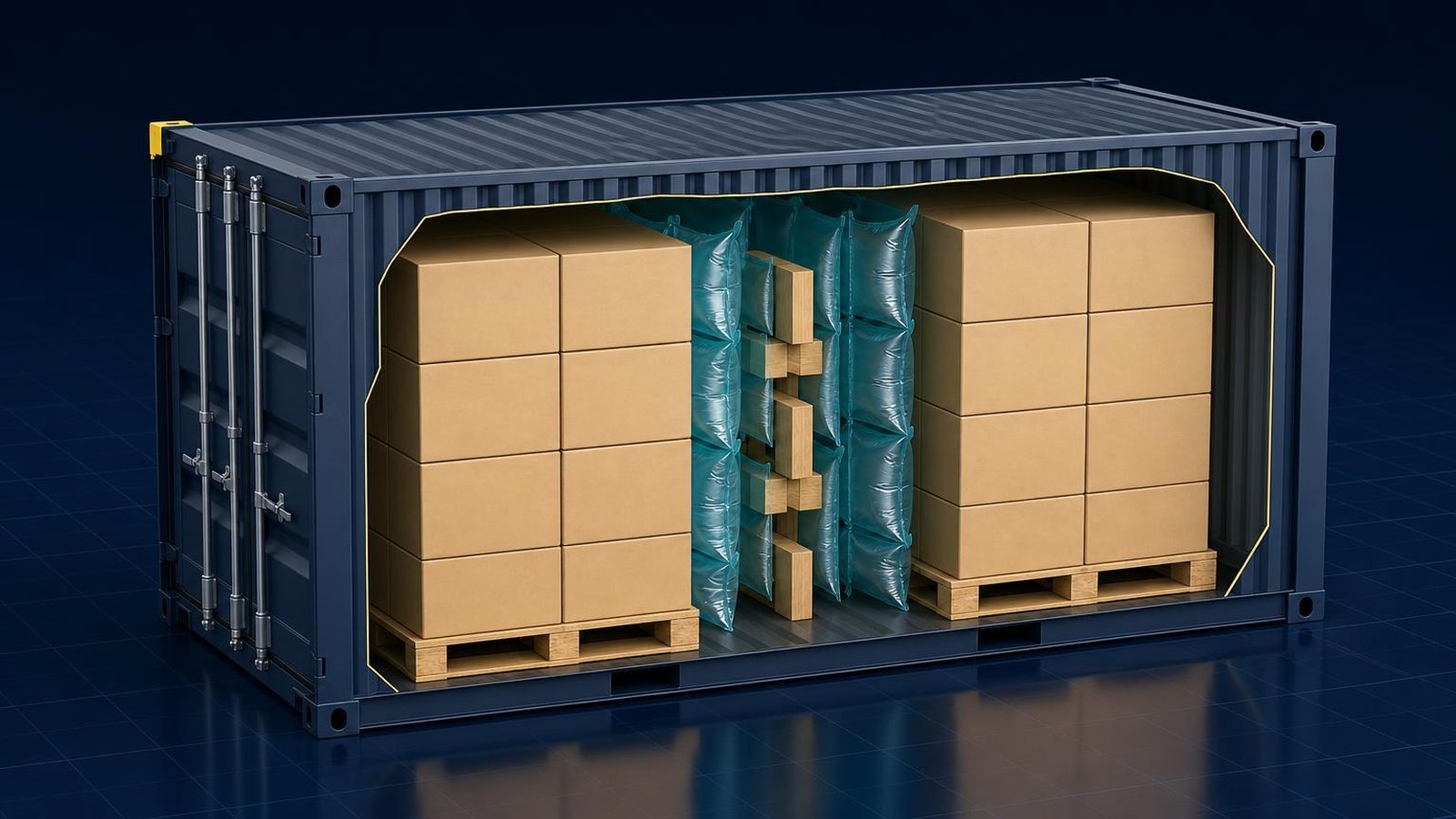
How Many CBM Fit in a Shipping Container?
| Container | Internal capacity |
|---|---|
| 20 ft standard | About 33 CBM |
| 40 ft standard | About 66 CBM |
| 40 ft high cube | About 76 CBM |
Capacities are as Mainfreight lists them. Plan on loading less than the full figure, because cartons and pallets never fill every corner.
CBM of a Standard Pallet
A 48 × 40 inch pallet loaded to a total height of 48 inches is 48 × 40 × 48 ÷ 61,024 = 1.51 CBM. Raise the load to 60 inches and it is 1.89 CBM.
Why CBM Matters to Your Cost
- LCL ocean freight is priced per CBM. Shaving a few centimeters off a carton lowers the bill on every shipment.
- It decides when a full container is cheaper. As LCL volume approaches the capacity of a 20 ft container, a full container at a flat price usually wins.
- It feeds landed cost. Freight per unit is the freight bill divided by the units that fit in the space you paid for. See landed cost vs FOB price.
- Suppliers quote it. A factory price list that shows CBM per carton lets you estimate freight before you place the order.
Frequently Asked Questions
What does CBM stand for in shipping?
CBM stands for cubic meter. It measures the volume of a shipment: length × width × height in meters.
How do you calculate CBM?
Multiply length, width and height in meters. In centimeters, multiply the three and divide by 1,000,000. In inches, multiply the three and divide by 61,024.
How many cubic feet are in 1 CBM?
One CBM equals 35.315 cubic feet.
How many kg is 1 CBM?
It depends on the mode. For ocean LCL freight, 1 CBM is treated as 1,000 kg. For air freight, 1 CBM converts to 167 kg of chargeable weight.
How many CBM fit in a 20 ft or 40 ft container?
About 33 CBM in a 20 ft standard container, about 66 CBM in a 40 ft standard and about 76 CBM in a 40 ft high cube, as Mainfreight lists them. Usable space is somewhat less.
What is the CBM of a pallet?
A 48 × 40 inch pallet loaded to 48 inches high is about 1.51 CBM.
Related Reading
- How to Calculate Dimensional Weight in 2026: Formula, Divisors and Examples
- Landed Cost vs FOB Price: What's Included and How to Calculate It
- FOB Shipping Explained: Origin vs Destination & What It Means for Your Costs
- What Is LTL Shipping? How LTL Freight Works, Freight Class and Rates (2026)
- Freight Class Chart: How to Calculate Your LTL Freight Class (2026)
Get a free freight and parcel invoice audit
D’Arrigo Consulting audits carrier invoices line by line for billed weight, billed dimensions and accessorials that do not match what was quoted. Request a free invoice audit.
This article is for informational purposes only. Carrier rates, surcharges and policies change frequently. Always verify current terms directly with the carrier for your specific situation. Have questions? Reach out to us.

Meet the Author
paul@darrigoconsulting.com
I’m Paul D’Arrigo. I’ve spent my career building, fixing, and scaling operations across eCommerce, fulfillment, logistics, and SaaS businesses, from early-stage companies to multi-million-dollar operators. I’ve been on both sides of growth: as a founder, an operator, and a fractional COO brought in when things get complex and execution starts to break