.png)
.png)


January 22, 2026
Why AI Fails in Operations — and How to Deploy It Where It Works
Why AI Fails in Operations and How to Deploy It Where It Actually Works
A contrarian take on why generic AI pilots fail in operations and where AI actually delivers value: embedded in daily decision loops, reducing cognitive load, and respecting operational constraints.
Introduction
AI is everywhere in headlines, sales decks, and boardroom conversations. Yet, when it comes to operations, too many AI pilots fizzle out, leaving leaders frustrated and skeptical. The promise meets the messy reality of complex, fast-moving environments where systems and people interact in ways no model can fully capture.
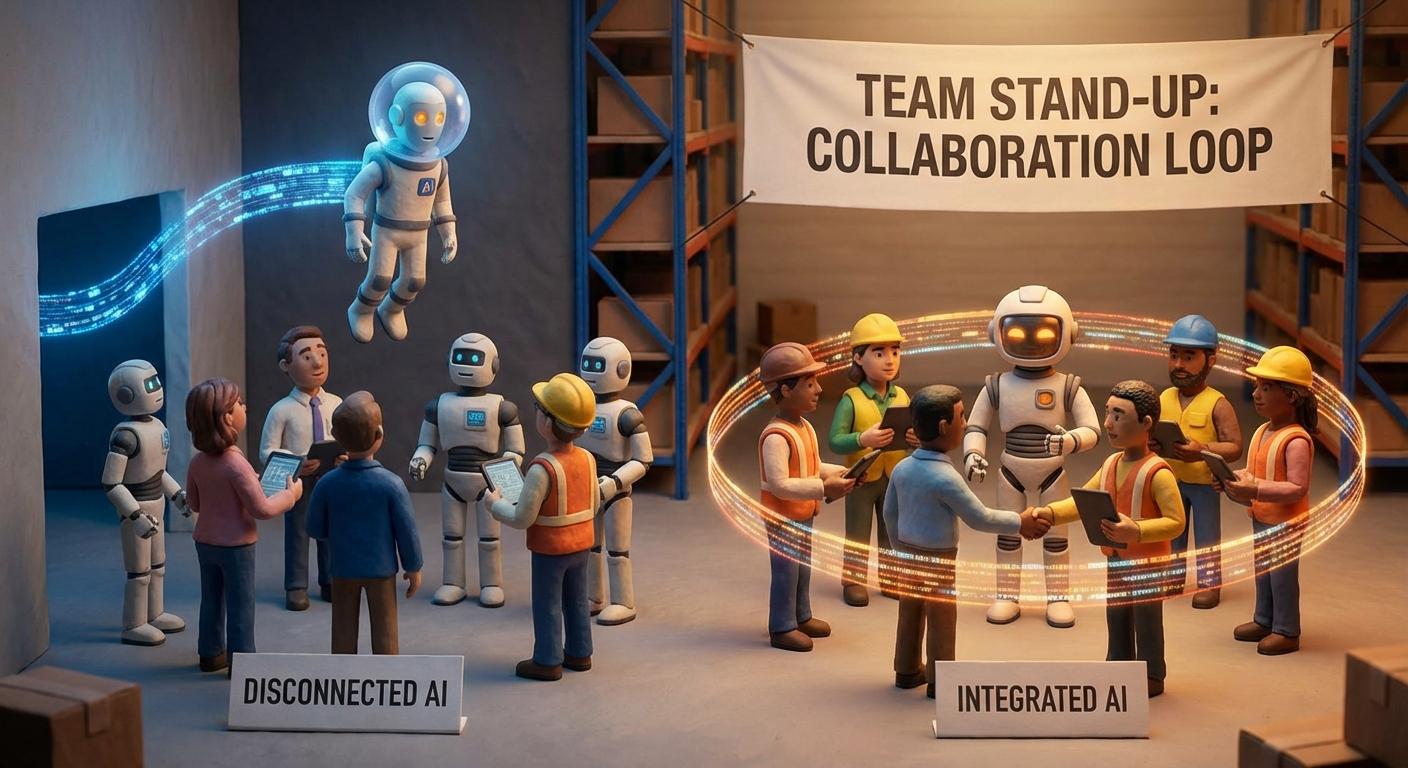
I've spent years scaling operations across logistics, supply chain, and eCommerce and I've seen a clear pattern: AI rarely fails because of technology alone. It fails because it's applied in the wrong places and without the operational rigor these environments demand. Generic pilots trying to solve everything often miss the mark, creating isolated pockets of automation that never scale or integrate into real decision-making.
The real value of AI lies elsewhere in tightly scoped, data-rich pockets where it can ease the cognitive load on frontline teams, respect the constraints of operational systems, and embed within daily decision loops. In this article, I'll explain why AI struggles in operations, where it actually delivers value, and how to build systems that scale it successfully. No hype just practical insights from the floor.
Why AI Fails in Operations: Common Patterns
Explore our Operational Assessment & Roadmap service.
This article is for informational purposes only. Carrier rates, surcharges, and policies change frequently — always verify current terms directly with the carrier for your specific situation. Have questions? Reach out to us — we're happy to help.

Meet the Author
paul@darrigoconsulting.com
I’m Paul D’Arrigo. I’ve spent my career building, fixing, and scaling operations across eCommerce, fulfillment, logistics, and SaaS businesses, from early-stage companies to multi-million-dollar operators. I’ve been on both sides of growth: as a founder, an operator, and a fractional COO brought in when things get complex and execution starts to break