.png)
.png)


April 12, 2026
UPS Return Label Cost 2026: What Returns Service Fees Mean & How to Save
What Is a UPS Returns Service Fee?
A UPS returns service fee is the charge that appears on a shipper’s invoice when they use one of UPS’s return label or return pickup services. The fee covers the cost of generating a return label, processing the return shipment, and in some cases, scheduling a pickup from the original recipient’s location.
If you are a recipient returning a package, you typically do not pay this fee directly — it is billed to the company that provided you with the return label. If you are a business managing returns, this fee is part of your reverse logistics cost.
Types of UPS Return Services and Their Costs
UPS offers several return service options, each priced differently depending on how the return is initiated and handled:
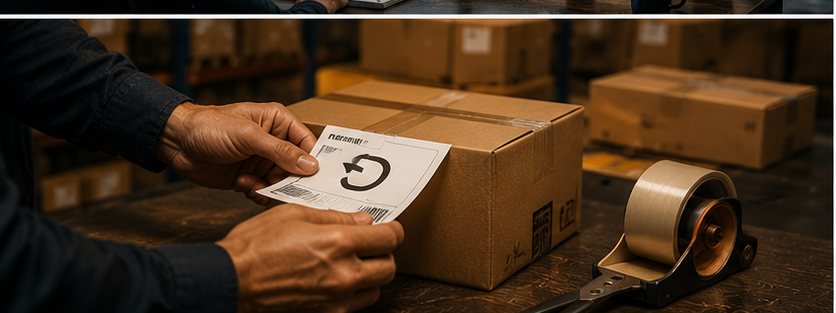
UPS Print Return Label — The shipper includes a preprinted return label inside the original package. The recipient attaches the label and drops the package at any UPS location or schedules a pickup. The shipper is only charged when the label is actually used. This is the most common return method for e-commerce.
UPS Electronic Return Label — The shipper emails a return label to the recipient, who prints it at home. Same pricing structure as Print Return Label but without the cost of including a physical label in every outgoing shipment.
UPS Returns Plus — UPS sends a driver to the recipient’s address with a label, picks up the package, and returns it to the shipper. This is the most expensive option but requires no effort from the recipient. The shipper pays both the return shipping cost and the call tag fee.
UPS Returns Flexible Access — Allows recipients to return packages through UPS Access Point locations, The UPS Store, or authorized retail partners. This gives the recipient more drop-off flexibility.
How Much Does a UPS Return Label Cost?
The cost of a UPS return has two components: the return service fee (for generating and processing the label) and the actual shipping cost of the return package. The shipping cost follows the same rate structure as outbound shipments — it depends on weight, dimensions, service level, and distance.
For Print Return Labels and Electronic Return Labels, the shipper is only charged when the label is scanned into the UPS network. Unused labels incur no cost. For Returns Plus (call tags), the shipper pays a call tag fee plus the return shipping cost regardless of whether the pickup is successful on the first attempt.
What Is a UPS Call Tag?
A UPS call tag is a driver-initiated pickup for a return. UPS dispatches a driver to the recipient’s address to collect the package. The driver brings a label if the shipper purchased a Returns Plus service, or the recipient must have the package labeled and ready if it is a standard pickup request. Call tags have a per-package fee on top of the return shipping cost.
How to Reduce UPS Return Costs
Return shipping can add up quickly for high-volume e-commerce businesses. Here are practical ways to reduce the cost:
Use Print or Electronic Return Labels instead of call tags — you only pay when they are used. Consolidate return shipments where possible. Negotiate return rates as part of your UPS contract, especially if returns make up a significant percentage of your total volume. Audit return invoices for billing errors — return shipments are just as likely to have overcharges as outbound shipments.
How much does UPS charge for a return label?
The cost of a UPS return label depends on the package weight, dimensions, service level, and distance. The label generation itself is typically free for Print Return Labels and Electronic Return Labels — the shipper only pays the shipping cost when the recipient actually uses the label. For Returns Plus (where UPS sends a driver to pick up), there is an additional call tag fee on top of the shipping cost.
What is a UPS return fee?
A UPS return fee is the charge a shipper pays when a package is sent back using one of UPS’s return services. It appears on the shipper’s invoice and covers the return shipping cost plus any applicable service fees. If you are the recipient returning a package with a prepaid label, you are not charged — the fee goes to the company that provided the return label.
Does UPS charge for return to sender?
Yes. If a package is undeliverable and UPS returns it to the sender, the sender is charged the return shipping cost. This can happen when the recipient refuses delivery, the address is invalid, or delivery attempts are exhausted. The return-to-sender charge is based on the same rate as the original shipment. Shippers can reduce these costs by verifying addresses before shipping.
How much does it cost to return a package through UPS?
The cost to return a package through UPS depends on the same factors as sending one: package weight, dimensions, service level (Ground vs. Air), and shipping distance. If the original seller provided a prepaid return label, the cost to you as the recipient is typically zero. If you need to create your own return shipment, you will pay standard UPS rates, which you can estimate at ups.com or at a UPS Store location.
What is UPS Returns Plus?
UPS Returns Plus is a service where UPS sends a driver to the recipient’s location to pick up a return package. The driver brings a shipping label if needed. It is the most convenient return option for the recipient but the most expensive for the shipper, as it includes both a call tag fee and the return shipping cost. It is commonly used for high-value items, warranty returns, or situations where the recipient cannot easily get to a drop-off location.
Related Reading
- What Does UPS COD Fee Mean? $22.50 Collect on Delivery Charge (2026)
- What Does UPS Signature Required Mean? $7.70 Fee & Who Can Sign (2026)
- What a Clean UPS Invoice Says About a Company
- UPS 2026 Rate Increase: Complete Guide to Every Service and Surcharge Change
- Parcel Audit Services: How They Work & What They Recover in 2026
- Shipping Audit Guide 2026: What It Covers, What It Costs & How It Works
Explore our UPS Invoice Audit & Freight Bill Recovery service.
This article is for informational purposes only. Carrier rates, surcharges, and policies change frequently — always verify current terms directly with the carrier for your specific situation. Have questions? Reach out to us — we're happy to help.

Meet the Author
paul@darrigoconsulting.com
I’m Paul D’Arrigo. I’ve spent my career building, fixing, and scaling operations across eCommerce, fulfillment, logistics, and SaaS businesses, from early-stage companies to multi-million-dollar operators. I’ve been on both sides of growth: as a founder, an operator, and a fractional COO brought in when things get complex and execution starts to break