.png)
.png)


January 22, 2026
Why Negotiated Rates Don’t Save You From Bad Operations
Why Negotiated Rates Don’t Save You From Bad Operations
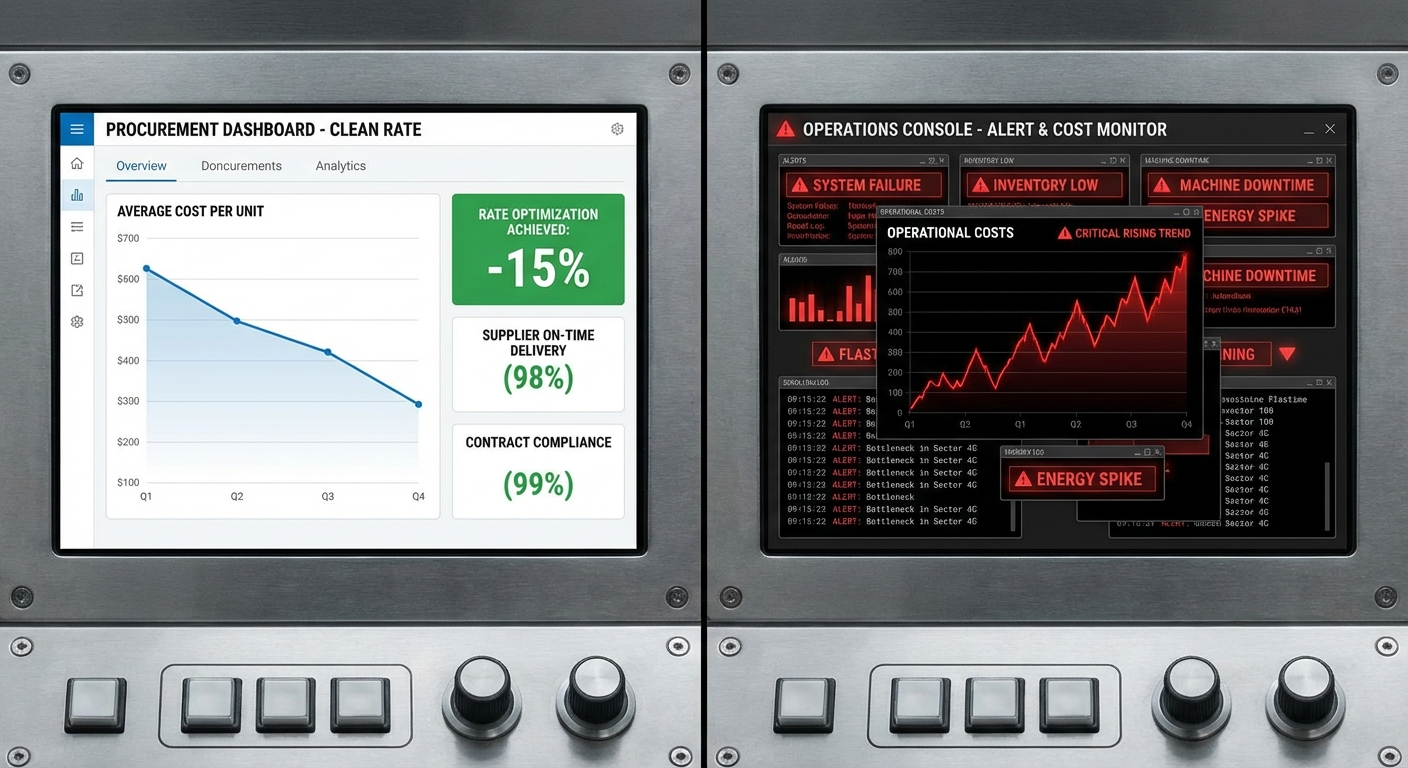
Negotiating freight rates feels like a natural point of leverage—who wouldn’t want to pay less per shipment? It’s an appealing shortcut in tight-margin businesses where every dollar counts. But here’s the reality no one wants to admit: slashing unit costs won’t save you if your operations are still out of sync.
Many logistics and supply chain leaders pour energy into winning better rates, convinced that cost savings start and end with the price on a contract. Yet in practice, those seemingly attractive discounts often vanish under the weight of delays, rework, and unexpected accessorial fees. Negotiated rates address only a sliver of the true cost picture. If you ignore the operational roots of waste, variability, and surcharges, you’ll find the savings aren’t sustainable.
This article breaks down why focusing solely on negotiated rates leaves you exposed to the bigger, messier drivers of total cost of ownership—and why truly scalable savings come from embedding procurement in a system of operational discipline, shared metrics, and data-driven process controls. Here’s how to move past the negotiation table and start fixing what really matters.
1. What Negotiated Rates Actually Cover — and What They Don’t
Negotiated rates set a price per pound, mile, parcel, or shipment. This clarity helps procurement teams benchmark and compare carriers. It also offers a tangible lever to apply pressure in competitive markets. But what do negotiated rates typically cover?
Primarily, they reduce the base unit cost—the “headline” price used for billing freight or services. This pricing is often locked into contracts, supported by volume commitments, and benchmarked continuously.
However, negotiated rates generally do not cover the wider range of operational costs that impact the total spend. These include:
- Accessorial fees such as detention, demurrage, re-delivery, inside delivery, liftgate service, address corrections, residential surcharges, and dimensional weight penalties. These charges are often excluded from base rate negotiations and fluctuate with operational performance or external conditions. For specifics, UPS outlines many of these avoidable fees here: https://www.ups.com/us/en/support/shipping-support/shipping-dimensions-weight/avoid-additional-shipping-fees
- Variability costs such as delays that cause mode shifts to expedited or premium services, missed appointment fees, or emergency handling.
- Rework and process defects including mislabels, mispicks, repacks, and other labor-intensive fixes that increase handling costs and labor hours.
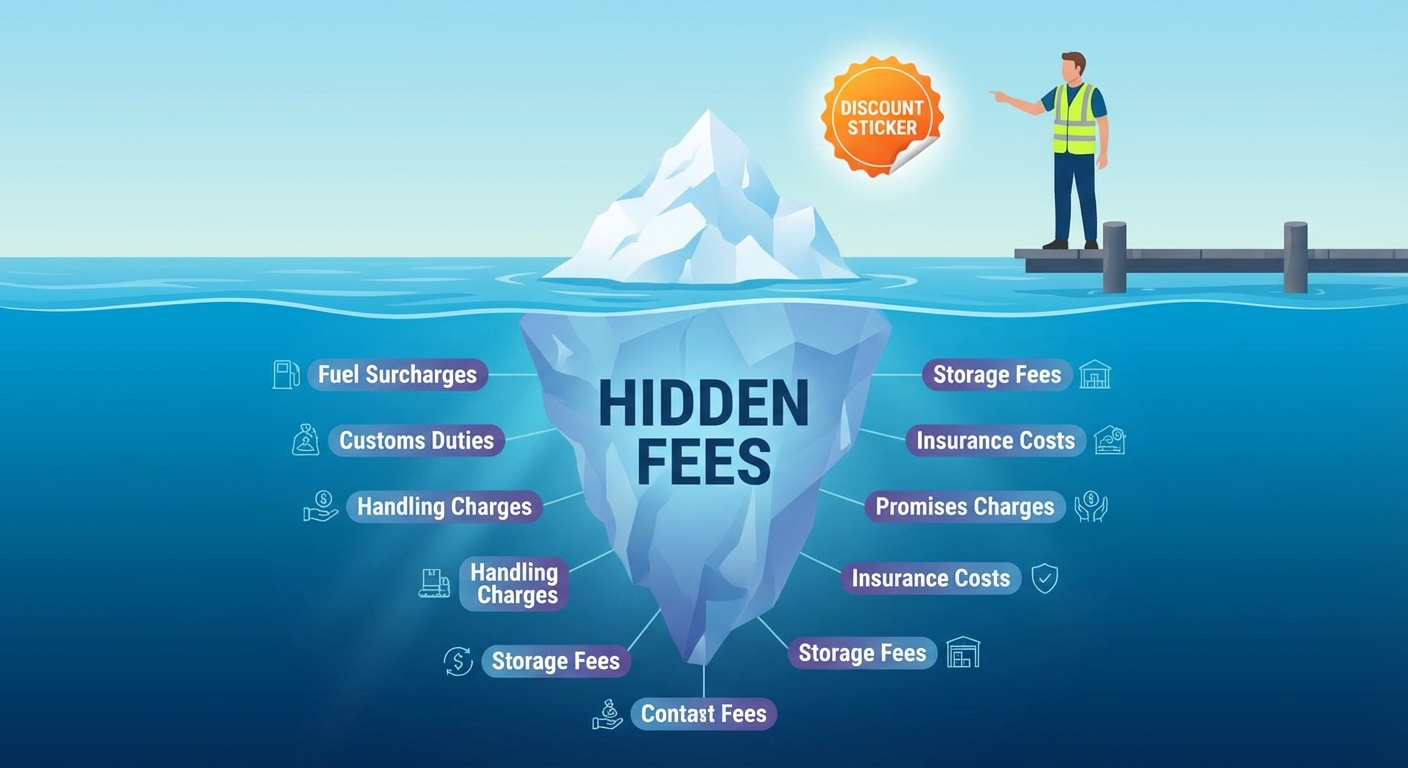
Data from the field illustrates the significance of these excluded costs. According to a Journal of Commerce report, detention and demurrage fees doubled in 2021, often completely offsetting savings made on negotiated base rates. (See: https://www.joc.com/article/detention-demurrage-fees-doubled-in-2021-report-5249545)
Lower rates do not prevent operational failures that trigger such fees. They also don’t reduce the buffers teams build into scheduling, inventory, and capital deployment to mitigate this variability.
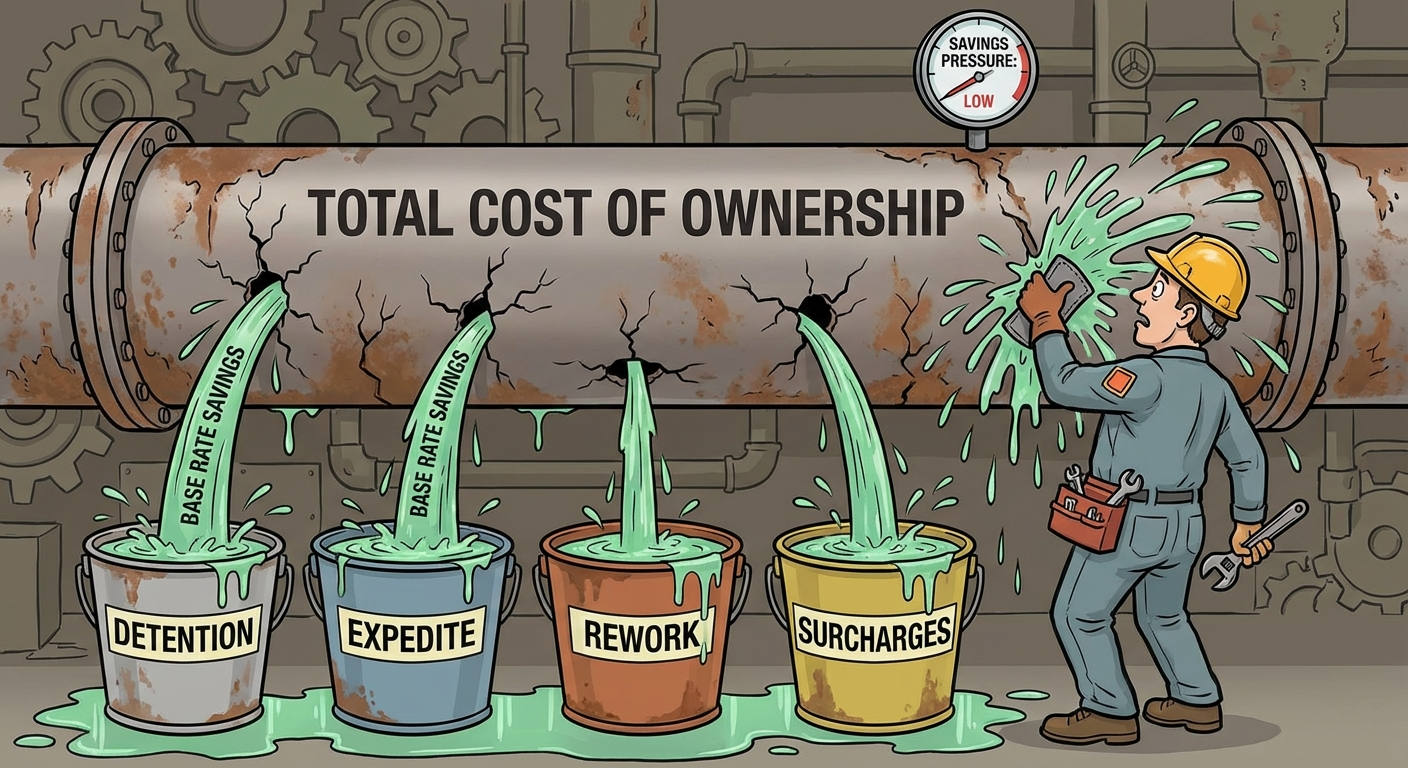
In short, negotiated rates only cover a fraction of your real cost structure. Execution-related costs — the variable, daily expenses tied to how well operations perform — represent the lion’s share of spend. Without addressing these execution risks through better systems and controls, negotiated savings end up theoretical, not realized.
2. The Real Drivers of Total Cost of Ownership (TCO) in Supply Chains
Total Cost of Ownership (TCO) goes well beyond the unit price negotiated between shipper and carrier. It captures the full spectrum of costs from source to customer, encompassing inventory carrying, handling, delays, quality issues, risk buffers, and waste.
While negotiated rates compress the line-item price, operational inefficiencies can swiftly inflate landed costs and erode margin.
Authoritative research from academic institutions and industry bodies bolsters this perspective. For example, the Association for Supply Chain Management (ASCM) contrasts simple ROI with TCO models that recognize inventory, labor, and delay cost components (https://www.ascm.org/ascm-insights/scm-now-impact/alphabet-soup-tco-roi-and-you/). Meanwhile, the MIT Supply Chain and Logistics group’s Total Landed Cost model explicitly quantifies how process variability disproportionately increases landed cost through rework, delays, and excess inventory (https://dspace.mit.edu/bitstream/handle/1721.1/142945/SCM29_Chaudhry_Lee_Total%20Landed%20Cost%20Model.pdf).
This plays out in multiple ways:
- Safety stock inflation: Variability in transit and handling forces companies to hold larger inventory buffers, increasing working capital and warehousing costs.
- Labor and handling waste: Rework generated by process defects requires time and resources that tie up capacity and increase overhead.
- Expedited services: Missed appointments or scheduling variability often trigger premium transport costs and penalties.
- Surcharges: Operational variability drives congestion and dwell times that lead to detention, demurrage, and related fees.
Consider a concrete example: A company negotiates a 4% discount on parcel freight. Over time, dimensional weight surcharges rise as shipment sizes unintentionally creep higher, while poor address data quality inflates correction fees and residential surcharges. The end result? The initial savings vanish under the weight of accessorial fees.
Or when cutting LTL base rates by 6%, but persistent dock congestion causes carriers to wait two hours beyond appointments, incurring detention fees that wipe out a week’s worth of savings.
The takeaway: Lowering unit rates helps but does not control the larger total cost picture dominated by operational variability and execution quality.
3. Why Procurement and Operations Must Collaborate Through Shared Metrics
Procurement teams are often evaluated chiefly on their ability to reduce purchase price. In many organizations, they operate relatively independently from operations teams responsible for execution and managing variability.
This functional silo creates a disconnect: procurement negotiates unit price, but operations absorbs surcharges and inefficiencies that drive up actual cost.
Leading research from McKinsey highlights how progressive firms break this divide by aligning procurement goals tightly with operational KPIs focused on service reliability, waste reduction, and execution excellence — beyond simply purchase price variance (https://www.mckinsey.com/capabilities/operations/our-insights/a-new-era-for-procurement-value-creation-across-the-supply-chain).
In practice, organizations should:
- Set shared targets that blend savings with operational measures such as on-time delivery rates, accessorial spend reduction, and rework minimization.
- Establish joint governance forums involving procurement, operations, transportation, finance, and customer service, with transparent data review and root cause ownership.
- Integrate closed-loop analytics where operational execution data (dwell times, exceptions, surcharges) feed vendor scorecards and inform future negotiations.
- Conduct pilots on process improvements (dock scheduling, cartonization, pick sequencing) with procurement involved as a partner, enabling contract changes based on validated operational improvements.
My experience as COO at Spend Management Experts confirms that operations-procurement integration drives sustainable savings. By instrumenting workflows to reduce variability before going to market, negotiations become easier and discounts more enduring. When you present a predictable, high-performing operation to carriers, they reward it with better terms — making savings real and repeatable.
4. Instrumentation and Process Discipline: The Levers for Execution Savings
The adage "You can’t fix what you don’t measure" applies fully here. The fastest path to meaningful savings lies in exposing the operational triggers that cause fees, delays, and rework—and then applying precise controls.
Critical areas to instrument include:
- Timestamp tracking: Capture gate-in/out, dock-in/out, appointment start and end times to monitor dwell and identify chronic bottlenecks.
- Warehouse KPIs: Measure pick accuracy, rework rates, carton utilization, pack time, and staging delays.
- Transportation events: Track tender acceptance, on-time readiness, ETAs versus actual delivery, and exceptions.
- Billing and invoice audit: Automate reconciliation with root cause tagging of each accessorial charge for targeted corrective action.
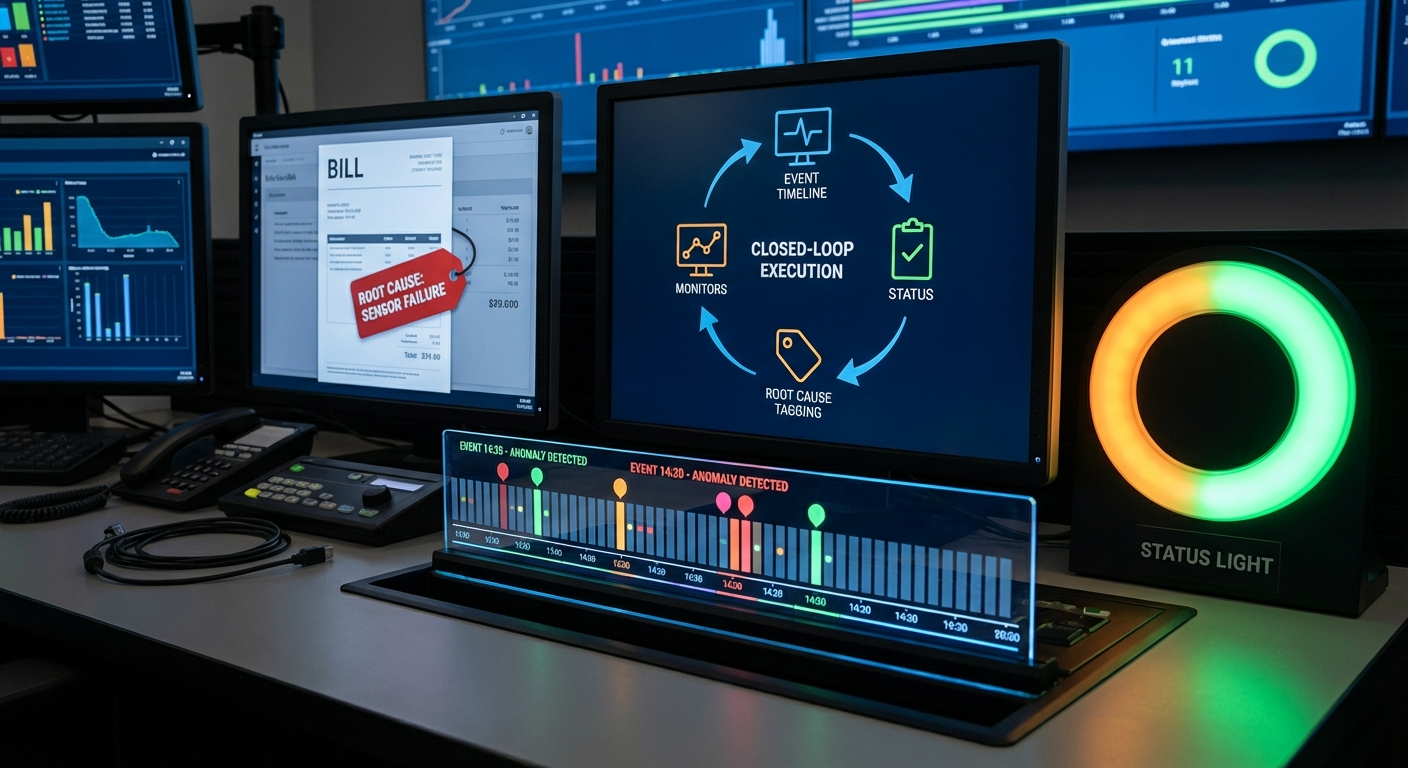
Closing these loops yields concrete benefits:
- For detention and demurrage, predictive triggers can alert teams before surcharges accrue, enabling labor rescheduling or rebooking to avoid fees instead of merely budgeting for them.
- With dimensional weight surcharges, enforcing packing standards informed by cartonization data can keep shipments under charge thresholds (see UPS guidance: https://www.ups.com/us/en/support/shipping-support/shipping-dimensions-weight/avoid-additional-shipping-fees).
- Address hygiene initiatives validate customer addresses at order capture, reducing correction fees downstream.
- Controlling appointment adherence by treating “on-time ready” status as a key internal metric reduces carrier dwell and associated charges.
Technological infrastructure—Warehouse Management Systems (WMS), Transportation Management Systems (TMS), Order Management Systems (OMS), carrier portals—often contains this data already. Success depends on connecting these systems, normalizing data timestamps, and standardizing root cause categories to avoid disputes while enabling operational feedback.
With robust data, teams can apply Pareto analysis, run targeted experiments, and lock in gains through updated SOPs and training.
As defect rates drop, execution variability shrinks, enabling a reduction in costly risk buffers such as safety stock and expedited services. Stable operations secure better contract terms, making negotiation the final step in a broader savings journey—not the silver bullet.
5. Tradeoffs and Constraints: Why Some Costs Persist Despite Improvements
It’s important to recognize that not all surcharges or delays are fully avoidable. External factors create structural constraints that limit achievable cost reductions:
- Market capacity limits: Port congestion, terminal labor shortages, chassis availability, and carrier network structures impose hard limits on throughput speed and flexibility.
- Detention and demurrage fees often reflect system-wide asset utilization and congestion, not just local operational failures.
- Carrier surcharges manage scarce resources and help carriers maintain network efficiency and asset utilization.
Addressing these systemic constraints may require strategic investments or redesigns such as network shifts, mode changes, nearshoring, dual sourcing, or inventory repositioning.
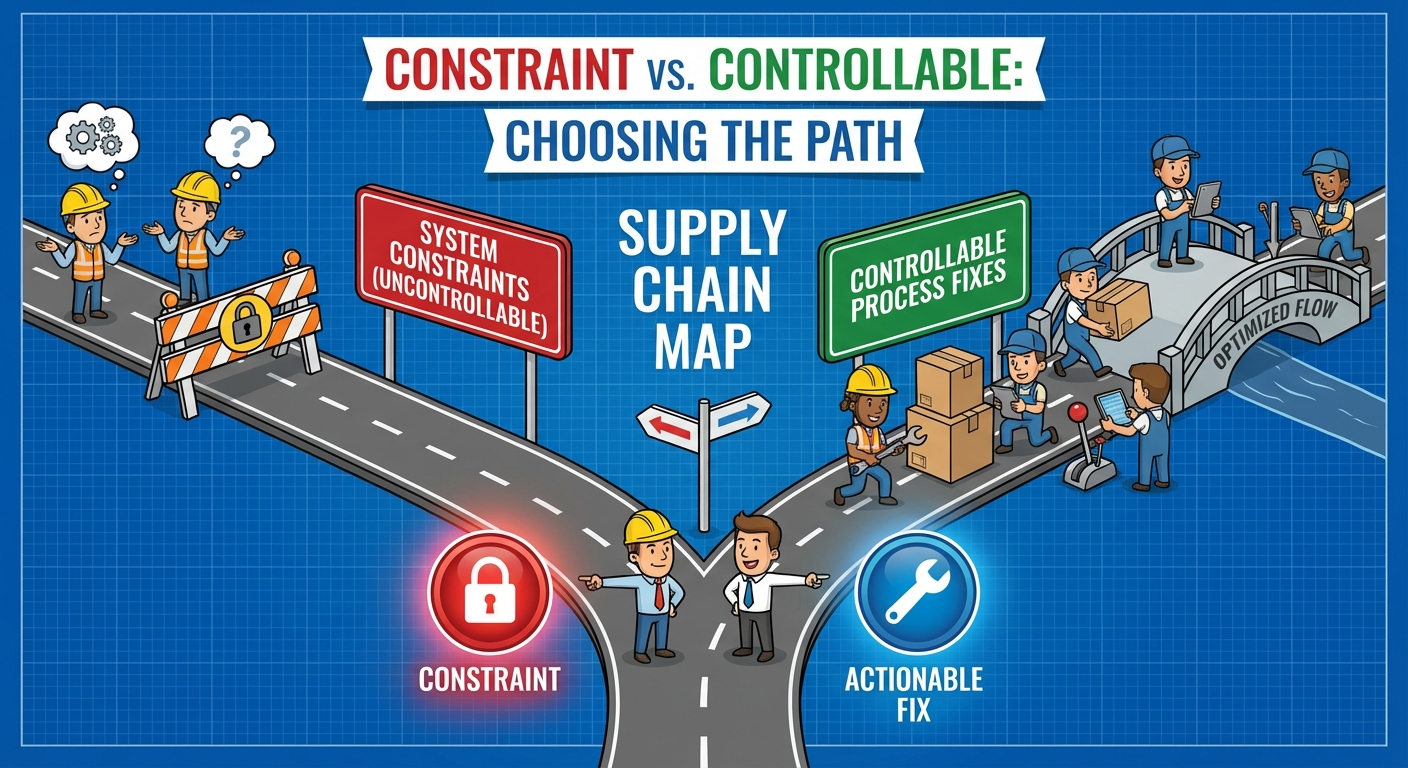
A systems-thinking approach helps separate controllable operational inefficiencies from structural constraints, guiding where process improvement delivers savings versus where longer-term strategic changes are needed.
One risk is overemphasizing rate negotiation, which may breed complacency about operational fundamentals. Yet it is those operational fundamentals—discipline, data, and process rigor—that build resilience and improve negotiability over time.
Conclusion: What Would Have to Change to Make Negotiated Rates the Main Driver of Savings?
In today’s complex and variable supply chain environments, negotiated rates are rarely the panacea for sustained cost reduction. They remain one lever among many, but often not the dominant driver of savings.
Could that shift? Possibly—with fully integrated total cost models that combine real-time data, shared accountability, and joint procurement-operations governance. Negotiations would then be a surgical tool deployed in the context of stable, predictable operations and transparent execution metrics.
However, contracts alone won’t eliminate all variability, surcharges, and systemic constraints inherent to real world supply chains.
The more pragmatic path is continuous, incremental improvement:
- Reduce rework and defects one driver at a time.
- Improve appointment adherence through discipline and technology.
- Optimize packaging to control dimensional weight fees.
- Clean up master data and enable operational root cause analysis.
Over time, these improvements lower total cost, simplify negotiations, and ensure that savings stick on the P&L.
The ultimate truth: contracts and negotiated rates matter—they set boundaries and align expectations—but execution quality decides whether those costs truly come down. Durable, scalable savings depend on systems design, operational discipline, and integrated processes that treat procurement as part of the operational ecosystem, not merely a price negotiator.
Key Takeaways
- Negotiated rates reduce headline unit prices but do not address operational variability and accessorial fees that drive up total cost.
- Total Cost of Ownership captures inventory, handling, delays, and rework costs that exceed simple unit pricing models.
- Procurement and operations must share goals, metrics, and governance forums focused on service reliability and waste reduction to unlock value beyond contracts.
- Instrumentation and process discipline enable early detection and prevention of surcharges rather than reactive budgeting.
- Some costs reflect systemic capacity constraints; focus operational improvements where controllable, and redesign networks strategically when necessary.
- Sustainable savings come from continuous operational improvements backed by data and shared accountability—not from negotiation alone.
Sources and Further Reading
- ASCM on TCO vs ROI
- McKinsey on procurement value creation
- UPS on avoiding additional shipping fees
- JOC on detention/demurrage increases
- MIT Total Landed Cost model
Author’s Note
I write as an operator. At Spend Management Experts, sustainable savings came not from chasing rates first, but from instrumenting work, closing loops, and negotiating from operational strength. It isn’t flashy. It works—and is repeatable. That approach makes savings real on the P&L—and keeps them there.
Disclaimer
This article is for informational purposes only and does not constitute professional advice. Results may vary depending on specific operational contexts and market conditions. Always consult with qualified professionals before making decisions based on this content.

Meet the Author
paul@darrigoconsulting.com
I’m Paul D’Arrigo. I’ve spent my career building, fixing, and scaling operations across eCommerce, fulfillment, logistics, and SaaS businesses, from early-stage companies to multi-million-dollar operators. I’ve been on both sides of growth: as a founder, an operator, and a fractional COO brought in when things get complex and execution starts to break