.png)
.png)


January 22, 2026
What does UPS Returns Service Fee mean?
What Does UPS Returns Service Fee Mean?
A practical breakdown of the UPS Returns Service Fee what it covers, why it exists, and how to model it correctly when scaling returns.
Introduction: Returns in the Real World
Returns are a fact of life in eCommerce and logistics, but they’re hardly simple. Behind every return is a web of operational steps that often get overlooked including fees that don’t show up where you might expect. One of the most misunderstood charges is the UPS Returns Service Fee.
This fee isn’t just about moving a package backward; it reflects the upfront work UPS invests before the item ever hits the truck. For businesses scaling their returns processes, grasping what this fee covers and why it exists is critical to accurate cost modeling and smarter operational decisions.
In this article, I’ll break down the UPS Returns Service Fee, explain its role in the returns ecosystem, and show how understanding it fits into building return systems that scale with control and transparency.
1. What the UPS Returns Service Fee Covers
At its core, the UPS Returns Service Fee is an accessorial charge triggered when a UPS Return Service option is requested. It acts as an activation cost for enabling the return before the package moves.
Key details:
- The fee applies per package and is assessed at the time you generate a return label or request the return service not at the time of physical shipment.
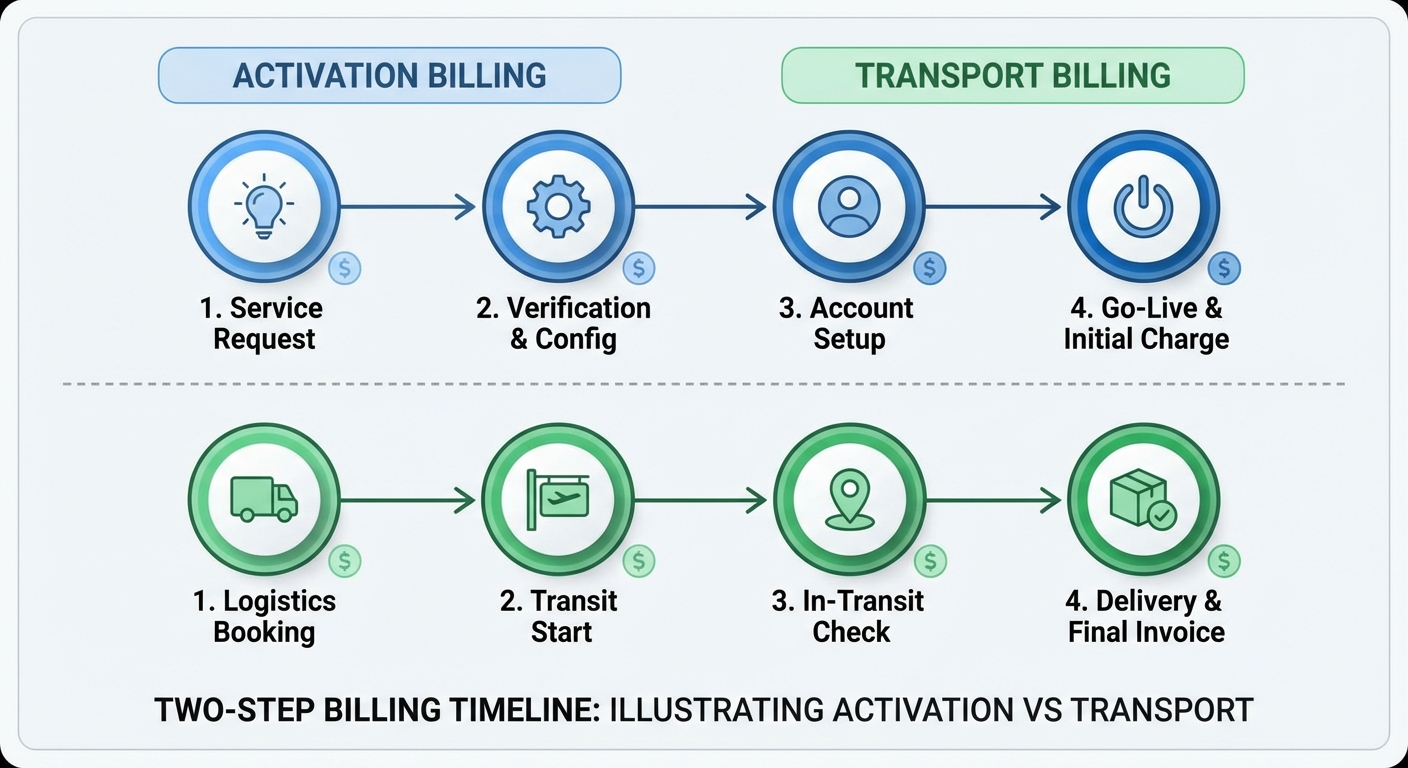
- It is distinct from transportation charges, which are billed after the package ships and is delivered back.
Return options that trigger this fee include:
- Print Return Label (you create and include a label in the outbound shipment)
- Electronic Return Label (UPS emails or links the label)
- Print & Mail Return Label (UPS prints and mails a label to the customer)
- UPS Pickup Attempts (typically 1 or 3 driver attempts to collect the parcel)
- Call Tag or UPS Returns Exchange (driver delivers label and/or swaps items at pickup)
This creates a two-step billing process: first, the Returns Service Fee posts when the return is enabled; second, the return transportation charge posts upon delivery. Your billing or transportation management system (TMS) should track both and associate them with the same order or RMA.
In practice, this means that simply requesting a return label triggers a cost regardless of whether the item is physically shipped back immediately or not. The Returns Service Fee essentially covers UPS’s work in setting up the return logistics in advance from label generation to scheduling pickups or exchanges. This upfront operational effort requires staffing, technology, and process management, all of which factor into the fee.
Alongside the Returns Service Fee, shippers must separately budget for the physical transportation cost which only occurs once the package travels from the customer back to the origin point. This separation highlights returns as a multi-stage process with distinct cost components.
2. Why UPS Bills a Separate Returns Service Fee

Reverse logistics is not simply outbound shipping in reverse. UPS incurs operational costs before a driver ever picks up a package. The Returns Service Fee covers these upfront activities, including:
- Label generation and data handling, with customer communication for electronic labels. Generating labels requires printing, electronic data interchange with downstream systems, and sometimes customer notifications or emails.
- Scheduling, routing, and managing exceptions for pickups and call tags. Coordinating truck routes for return pickups is complex, especially when customers select multiple pickup attempts or exchanges.
- Customer service interactions and coordination related to pickup attempts or exchanges. Staff must handle inbound calls, handle no-shows, cancellations, or rescheduling.
- Administrative overhead for returns that may be requested but never shipped. Many returns requests generate labels or pickups that customers never finalize—UPS incurs real costs covering these no-move scenarios.
This last point matters operationally. Many labels are generated but never scanned in the system. If UPS waited to bill until the first scan, it would absorb risk and costs for unused return labels. Billing at label creation or service request transfers that cost and risk to the shipper, aligning incentives.
This is not punitive; it reflects the real cost structure and complexity inherent in returns, which have more path variations than outbound shipments. Returns require handling a wider range of exceptions, unpredictable pick-up windows, and nuanced customer interactions before the item moves.
In other words, the Returns Service Fee acts as a signal to shippers: returns involve upfront administrative and operational work that differs fundamentally from initial shipments. By separating the fee, UPS aligns cost recovery and resource allocation more transparently and predictably.
3. How the Fee Influences Operational Decisions
Understanding the Returns Service Fee as an activation cost allows for better operational choices that improve cost predictability and strategy for returns programs.
Forecasting and Unit Economics
Build your cost model to include both the Returns Service Fee at label request and the transportation charge upon package delivery. If you offer pickup attempts or call tags, include those fees separately.
Avoid combining the Returns Service Fee with standard shipping costs in a single bucket. Treat it as a distinct cost driver to enable fine-tuning of policies and margin analysis by return method.
Selecting Return Methods
Electronic Return Labels offer flexibility and speed with relatively low fees, making them a good default option. Print & Mail adds customer convenience but increases cost due to printing and postage.
Pickup Attempts and Call Tags serve specific customer segments or complex return scenarios but increase cost and variability, so use these services judiciously.
For low-margin or low-average-revenue-per-unit SKUs, pickup-based options can quickly erode contribution margin. Understanding the Returns Service Fee helps quantify this impact clearly.
Customer-Facing Return Policies
Decide when to provide return labels: auto-including labels in every outbound shipment increases unused-label fees if many never return, driving unnecessary cost.
Consider tiered approaches such as free electronic labels on request, charge pass-through fees for pickups, and reserve call tags for exceptions or high-value customers.
Align policies to customer behavior; don’t normalize pickups if rarely used, but also accommodate options where they drive customer satisfaction and retention.
Accounting and Reconciliation
Expect Returns Service Fees to appear earlier than transportation charges on bills. Set general ledger mappings and reporting to link both fees to the same return incident or order.
For 3PL partnerships, ensure SLAs and billing reports differentiate these fees clearly to optimize invoice reconciliation and operational cost transparency.
By integrating these considerations into operations, companies can better manage the economics and workflow of their reverse logistics processes.
4. Regional and Option-Based Fee Variability
The specific Returns Service Fee amount varies by:
- Return method selected: Print label versus electronic label, pickup attempts, or call tag.
- Geographic region of origin and destination: Different countries or even regions within countries have varying labor costs, postage rates, and market conditions that affect fees.
UPS publishes detailed fee schedules and tariffs which operators must reference for accurate cost projections.
This variability is sensible; printing and mailing a label in the United States has different costs and overhead than in Europe or Asia. Pickup services also differ depending on urban density, driver labor costs, and scheduling complexity.
Contractual agreements with UPS may also impact the exact fees charged volume discounts, bundling, or negotiated terms may mitigate some cost but don’t eliminate intrinsic cost drivers.
For businesses managing cross-border or multi-regional returns, integrating real-time or up-to-date tariff data into return label generation software and ERP systems is critical to maintain accurate pricing and margin control.
Ignoring regional variability risks underestimating return costs or mispricing customer expectations.
5. Practical Takeaways for Scaling Returns
- Integrate the Returns Service Fee explicitly into your unit economics and financial models to avoid surprises in return cost forecasting.
- Track label issuance, scans, and completed returns to measure unused-label rates by SKU and sales channel.
- Default to issuing electronic labels post-return approval rather than automatic inclusion in every outbound shipment, unless your data supports the economics of upfront labels.
- Treat pickup and call tag services as exceptions with pass-through pricing or clear customer-facing fees to control cost and behavior.
- Build or enhance software workflows to record return option selection, label creation timestamp, and pickup scheduling tied to each return authorization or RMA.
- Create invoice mappings that coherently associate Returns Service Fees and return transport charges with the same return transactions for bookkeeping clarity.
- Negotiate fee structures proactively if returns are a critical part of your competitive advantage or operational complexity.
- Monitor customer return behavior and respond to rising unused-label rate signals by adjusting policies, messaging, or user experience to prevent costly label over-issuance.
Billing Example to Illustrate

Suppose you ship 100 orders and experience a 12% return rate:
- All 12 customers request Electronic Return Labels.
- Approximately 20% of these (2 to 3 customers) upgrade to 1 Pickup Attempt.
- All 12 returns complete transit back to origin.
Your cost would include:
- 12 Returns Service Fees (assessed immediately at label request)
- 2 to 3 Pickup Attempt fees (charged when scheduled)
- 12 transportation charges (upon package delivery)
If some labels go unused—say a few customers never send the item back—you still pay for their Returns Service Fee, a reality essential to include when setting return policy and pricing.
Such modeling prevents underestimating true reverse logistics costs and helps design customer and operational policies aligned with profitability.
Edge Cases and Common Questions

- Is the Returns Service Fee refundable if a label remains unused?
Generally, no. The fee covers the service activation and UPS’s upfront effort, not the transport itself. Some contract exceptions may exist, but typically the fee is non-refundable. - What if a return is refused or returned without a label?
Carrier-initiated returns due to refusal or undeliverable status are generally billed under different rules and don’t follow the standard Returns Service Fee framework. - Can freight or consolidated returns avoid the fee?
Different shipping modes and consolidation strategies alter cost structures but don’t eliminate the need for upfront service activation. Consolidation can reduce per-unit costs but may impact speed and convenience.
Understanding these nuances helps prevent surprises or service gaps.
Conclusion: The Big Picture
The UPS Returns Service Fee exists to cover the upfront work UPS performs enabling returns before any physical movement happens. This two-step billing service fee upon return activation and transport charge upon delivery is not a catch but a deliberate cost allocation that reflects the complexity and resource demands of returns versus outbound shipments.
For businesses scaling returns, this means:
- Modeling the Returns Service Fee separately from transportation costs.
- Issuing return labels intentionally and tracking their use.
- Controlling pickup-based and call tag services carefully.
- Staying up to date on fee schedules and contractual nuances.
Though pricing structures and software continue to evolve, the underlying principle remains fixed: returns consume dedicated resources before shipping and must be costed accordingly.
Operators who internalize this build return programs that are transparent, controllable, and scalable — key to sustaining profitability as return volumes grow.
References and Further Reading
- UPS Service Guide (U.S.)
- UPS Returns Services overview
- UPS Terms and Conditions of Carriage
- UPS UK Tariff Example
Paul D’Arrigo explains how complex businesses actually work and what it really takes to build systems that scale.
Disclaimer: This article is for informational purposes only and reflects publicly available information and operational experience as of its publication date. It does not constitute legal, financial, or professional advice. Contract terms, pricing, and UPS policies may vary and are subject to change. Readers should consult directly with UPS or their agreements for specific details.
```

Meet the Author
paul@darrigoconsulting.com
I’m Paul D’Arrigo. I’ve spent my career building, fixing, and scaling operations across eCommerce, fulfillment, logistics, and SaaS businesses, from early-stage companies to multi-million-dollar operators. I’ve been on both sides of growth: as a founder, an operator, and a fractional COO brought in when things get complex and execution starts to break